A decade ago, if you handed us drawings for a 42-storey residential tower, we would have asked three questions. What's the amenity list? How many renders per typology? When's the launch? Today, we ask one: what should the buyer feel when they see the first image?
It took us eleven years to understand that we had been answering the wrong question. And most of our peers — in Mumbai, in Bangalore, across India — are still answering it. They render the swimming pool. They render the gym. They render each amenity with the care of a product photographer shooting cutlery for a catalogue. And then they wonder why the sales team says the images are "nice, but not clicking."
Here's what we've come to believe: a render sells an apartment the way a film still sells a film. Not by inventorying what's inside, but by making you want to be inside.
01 — The amenity trap.
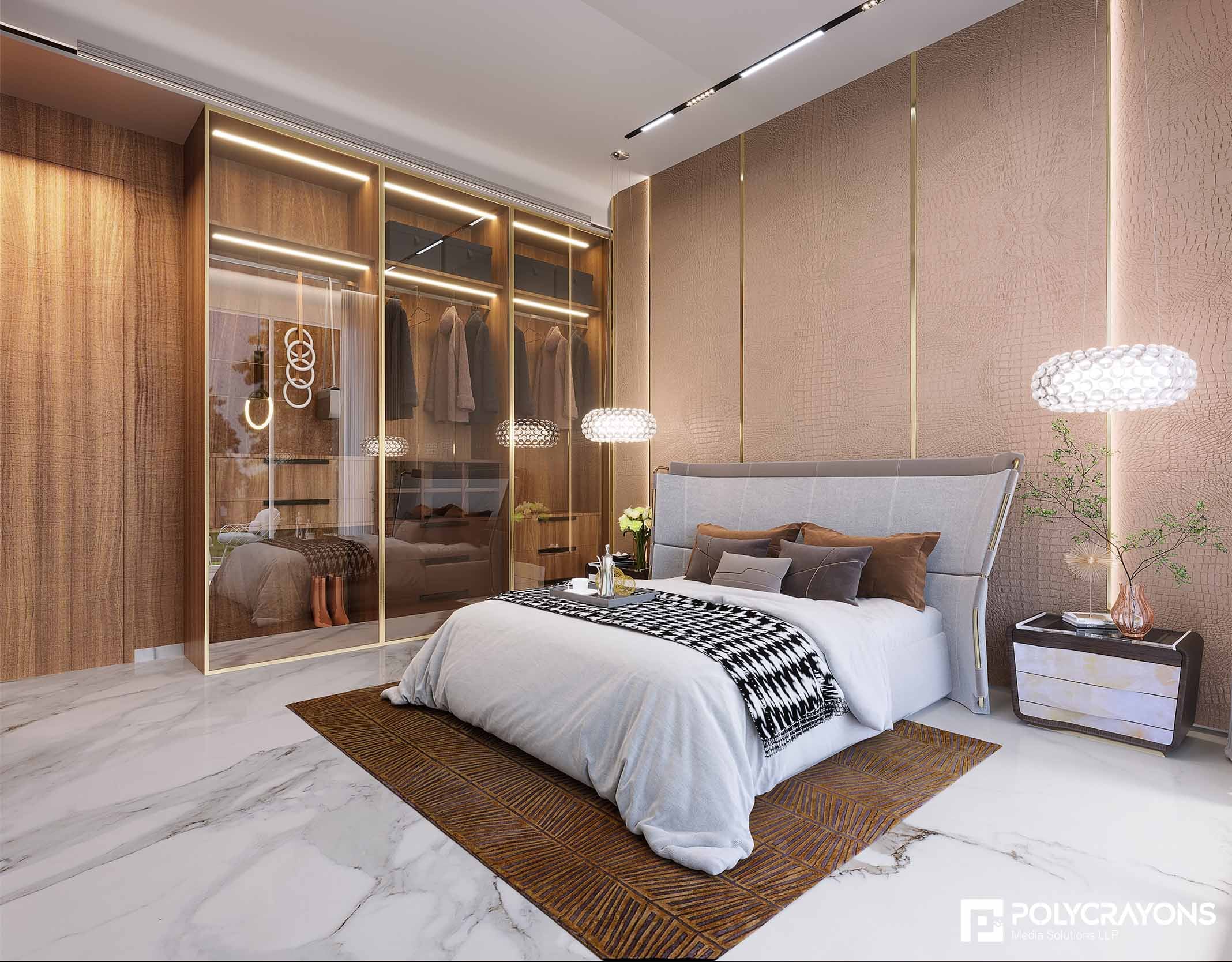
Real estate marketing in India has a deeply inherited habit: lead with the feature list. Walk-in wardrobe. Smart home. Italian marble. Infinity pool. Every item gets its own render, every render gets a caption, every caption goes into a brochure that fans out across fourteen pages.
The logic is comforting. Features are measurable. You can compare 14-foot ceilings to 12-foot ceilings on a spec sheet. But here's what we started noticing, around 2019, when a senior sales consultant told us bluntly over coffee: "Nobody turns the page."
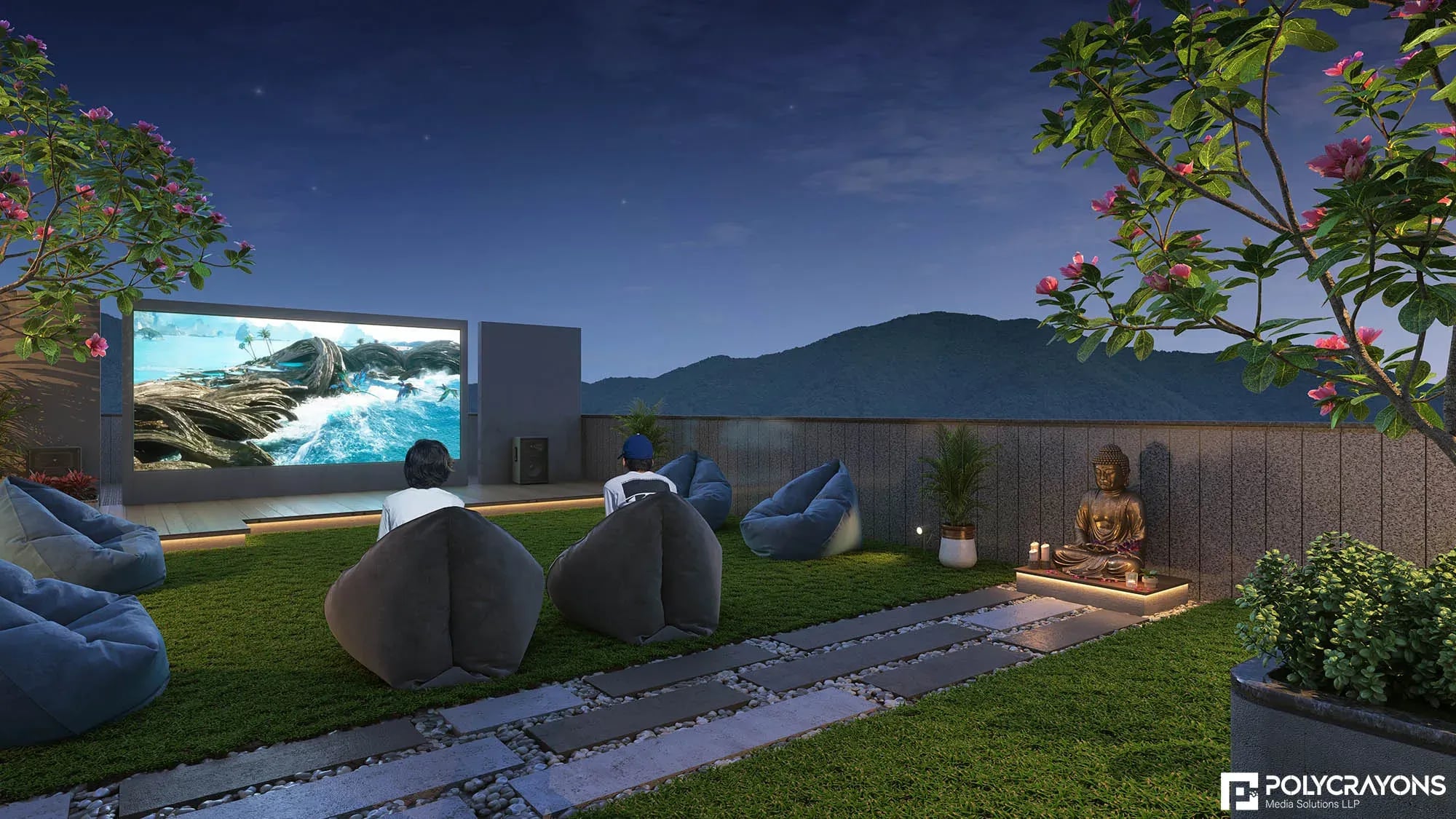
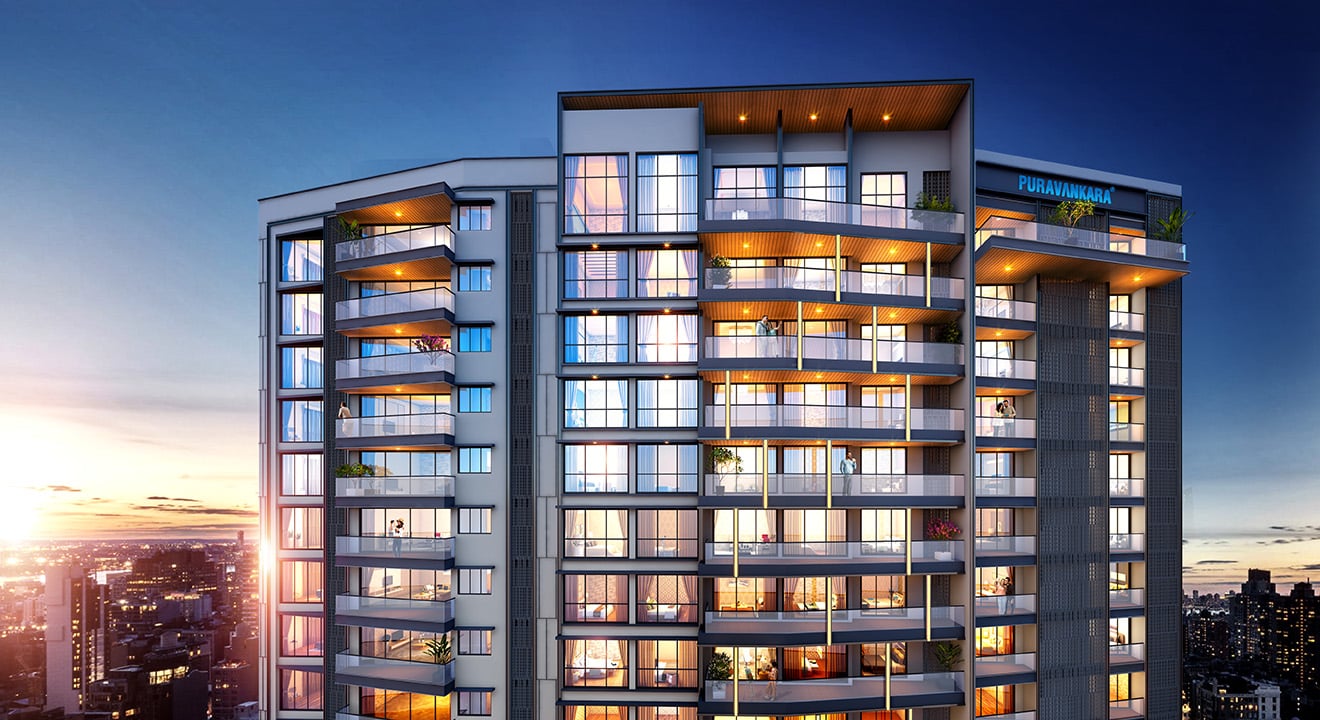
The brochure with 14 pages of features? Buyers read the first spread and put it down. The 22-image render package we delivered? They looked at image one — the dusk aerial — for forty seconds. They looked at image 22 — the home theatre — for two.
02 — A quieter way in.
So we tried an experiment. On a project in late 2020 — a mid-market launch in Thane — we shipped six renders instead of the contracted eighteen. All six were atmosphere-first. No amenity close-ups. No spec shots. No tours of the gym.
The sales team panicked — privately — for the first two weeks. Then inquiries started coming in. Walk-ins doubled. Sales gallery dwell time tripled. The bench render got memed on local WhatsApp groups. Three buyers made offers sight unseen.
A feature list tells you what you'd get. An atmosphere tells you who you'd become. Buyers don't purchase apartments. They purchase future versions of themselves.— Rajvardhan Maurya · Studio notes, December 2020
03 — What changed for us.
The shift sounds like a marketing insight. It was, for the first three months. After that, it became a craft-level restructuring:
- Lighting decisions moved earlier. We used to pick hero shots first, then light them. Now we pick the atmosphere first — the hour, the weather, the season — and everything else follows.
- Our material libraries got smaller and deeper. A single set of walnut flooring studied at four humidity conditions does more work than twelve generic wood textures.
- We hired a sound designer as a consultant. Not for animation — for stills. She helps us talk about images in her vocabulary: pitch, silence, decay.
04 — The five-minute rule.
Here's the test we now run on every image before it leaves the studio: could this image exist at any other hour? Could it be any other season? Can a viewer name the mood in under five seconds? Would a real architecture magazine publish it unedited?
Most renders fail at question three. We've had images that took five days of lighting work go back into the render queue because they failed at the final review. It's painful. It also works.
05 — Try it on your next brief.
If you're a developer, an architect, or a marketer working on a launch — try this before your next kickoff. Don't send us the amenity list first. Send us the hour you want the buyer to visit. We'll come back with a different proposal than the one you were expecting. Probably fewer images. Probably better ones.